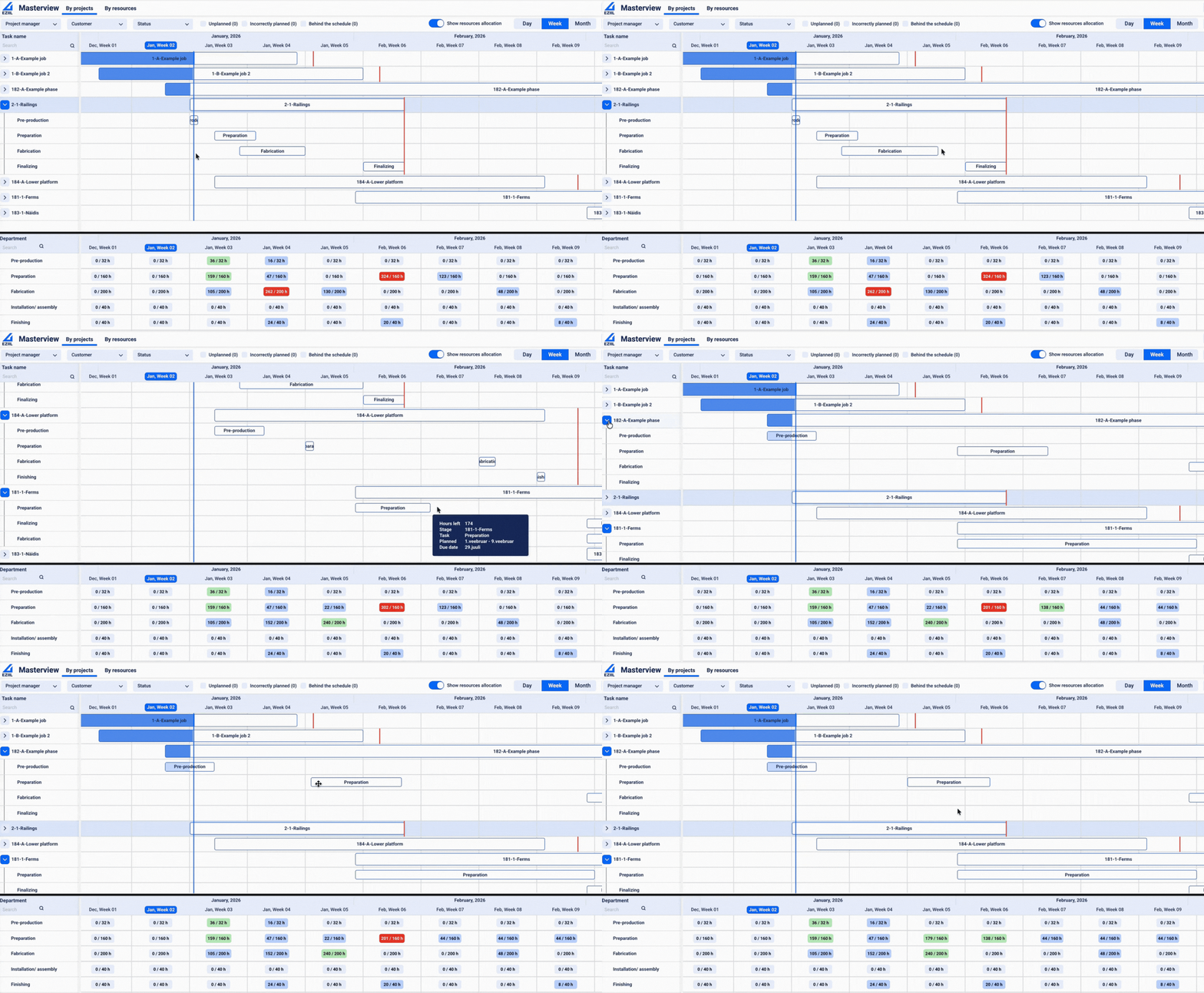
What is a Master Production Schedule (MPS) in steel fabrication?
A Master Production Schedule (MPS) is a time-phased plan that states what you will produce, when, and in what quantities. It connects demand (customer orders and sometimes forecast) to what your shop can realistically execute.
In “repeat manufacturing,” an MPS often lists finished products by week. In a steel fabrication job shop, you usually don’t have tidy SKUs and stable routings. You have projects, assemblies, revisions, subcontract steps, and department constraints. So your MPS becomes a practical commitment like:
Which jobs (or major assemblies) will ship each week?
When must each job hit key milestones (material ready, weld complete, finishing booked, ship)?
Do we have enough capacity in the real constraints (welding, finishing, specialty machines)?
You can think of the MPS as the plan that prevents your shop from living in permanent “expedite mode.”
Why Master Production Schedule matters in steel fabrication?
For small to mid-size custom fabricators, most schedule pain comes from a familiar pattern:
You win work and promise dates.
You release too much to the floor to “get ahead.”
WIP explodes, priorities change daily, and the constraint gets buried under half-started jobs.
You ship late, margins leak, and the team feels like they’re always behind.
A solid MPS is how you stop that loop. It matters because it:
Protects on-time delivery by forcing an honest view of what can ship and when
Reduces WIP by making release decisions deliberate instead of emotional
Improves purchasing because material timing is tied to the plan, not guesses
Creates stability so supervisors can execute instead of constantly re-planning
Best practices for a Master Production Schedule that actually work
1) Plan in weekly buckets, execute daily Keep the Master Production Schedule at the “week + milestone” level. Save hour-by-hour sequencing for dispatch lists and shop floor scheduling.
2) Use a planning time fence Time fences are a formal way to protect the near-term schedule from constant churn. In simple terms: the next few days are “mostly frozen,” and changes require a real reason.
3) Validate with rough-cut capacity (RCCP) Before you publish the plan, do a quick capacity check on the constraints. Rough-cut capacity planning exists specifically to test whether the master schedule fits critical resources. In a fab shop, this can be as simple as: welding hours available vs welding hours required for the next 2-4 weeks.
4) Gate release by readiness A Master Production Schedule collapses if jobs are released without the basics: