Discrete Manufacturing
What is discrete manufacturing in steel fabrication?
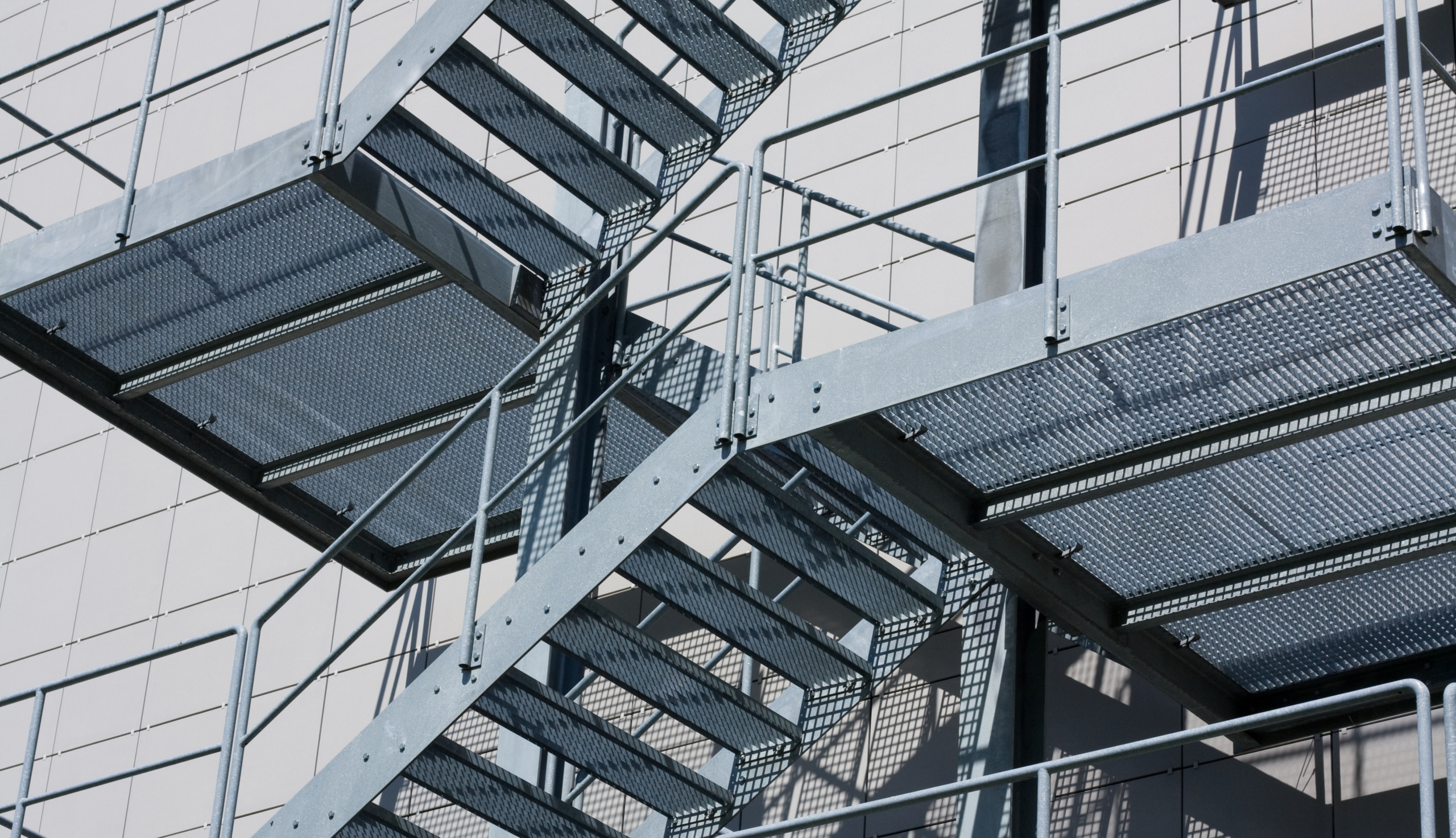
Discrete manufacturing is the production of distinct, countable items that can be picked up, counted, and shipped one at a time. A steel staircase is discrete. A handrail is discrete. A welded weldment, a CNC-cut plate, a bolted moment frame, all discrete.
The opposite is process manufacturing, which produces continuous outputs measured by volume or weight: chemicals, food, paint, refined metals. You cannot count a batch of paint the way you count steel beams.
For custom steel fabricators, the answer is simple: you are a discrete manufacturer. Everything you build can be unbolted, recounted, and reassembled. That technical fact has big implications for how you should run the shop and which software actually fits.
Why discrete manufacturing matters for custom steel fabricators
It matters because every ERP vendor on the planet uses this word to qualify you in or out before you even see a demo.
When a vendor asks “are you discrete or process manufacturing?” they are deciding which version of their product to put in front of you. The wrong answer puts you into the chemicals or food module, with bills of materials measured in liters and routings designed for continuous flow. You will spend the next demo wondering why nothing fits.
Inside the discrete category there are also important sub-types that determine fit:
- Repetitive discrete: The same product, day after day, in volume. Automotive parts, white goods, electronics assembly. High volume, low variation.
- Custom discrete (ETO/project-based): Every job is different. Structural steel, custom equipment, bespoke metalwork. Low to medium volume, high variation. This is you.
- Batch discrete: Small batches of identical products, then changeover. Many job shops live here.
Most ERP demos default to repetitive discrete, because that is where the volume of the manufacturing software market sits. If you are custom or project-based, the assumptions in those tools (stable BOMs, repeatable routings, MRP-driven planning) do not match your reality. This is why “discrete manufacturing ERP” is not the same thing as “fabrication ERP.”
How discrete manufacturing shows up in a steel shop
Practical signs you are running discrete manufacturing:
- You count finished items: 14 staircases, 220 brackets, 3 mezzanine frames.
- You cut, weld, machine, or assemble distinct parts that combine into a finished product.
- Each finished product has a serial number, a heat number trace, or a project reference.
- Quality inspection happens on individual pieces, not on a sample of a batch.
- Your scheduling problem is “which order, on which machine, when,” not “how to keep the line running 24/7.”
The mental model your software needs to support is: distinct jobs, each with their own BOM and routing, sharing finite shop floor resources (welders, CNC machines, paint bay, cranes). That is the discrete fabrication scheduling problem.
Best practices for running a discrete manufacturing fab shop
- Build the routing once, reuse it deliberately. Even custom shops have 5 to 15 “shapes” of routing (structural welded, machined bracket, finished handrail, etc.). Define them once, assign them per job, edit the deltas. This is how you keep planning sane.
- Finite capacity scheduling beats infinite. A 30 person fab shop running infinite capacity in Excel is the recipe for the “8 jobs are all due Friday” surprise. Pick a tool that respects real capacity.
- Track first-pass yield (FPY). In discrete manufacturing, FPY is the cleanest measure of shop health. Welding rework, fit-up errors, paint defects. If FPY is sliding, your margin is sliding.
- Trace material to part to job. Discrete = serialized, and serialized requires traceability. Heat numbers, mill certs, weld procedure specs. This is also the foundation of EN 1090 and AISC compliance.
- Use a shared digital board. The whiteboard with magnets is fine until you have 12 active jobs and three site projects in parallel. Then you need a system everyone can see from anywhere.
How EZIIL helps discrete custom steel fabricators
EZIIL is purpose-built for discrete, project-based custom steel fabrication, not adapted from a process or repetitive discrete platform. The difference shows up in the details:
- One project, one source of truth. Every job has its own BOM, routing, capacity plan, document set, time tracking, and cost actuals, all linked. You do not piece this together from 5 spreadsheets.
- Finite capacity by department. Welding, CNC, paint, assembly, fitting. See exactly which department is overloaded next week before you accept the next order.
- Mobile shop floor app for serialized tracking. Operators scan, time-track, and capture status on iOS or Android. Each scan is tied to the specific weldment or part, so FPY and traceability come for free.
- EN 1090 and AISC traceability native. Material certs, welder qualifications, NDT reports, all captured against the job. No separate compliance folder.
- Flat-rate pricing that scales with your team, not your transaction volume. €120/month for 1 to 15 users, €180 for 16 to 50, €290 for 51 to 150. No per-user pricing, no per-transaction fees. Discrete fabricators do not have repetitive-discrete transaction volumes, and they should not pay for them.
If you are a discrete custom steel fabricator weighing your software options, the question is not “do we need discrete manufacturing software?” The question is “do we need software built for custom discrete or repetitive discrete?” If you are custom and project-based, take a free EZIIL product tour and see what fabrication-specific looks like.