Order cycle time is the total elapsed time from when a customer order is accepted to when the order is shipped or delivered. In other words, it captures the customer’s waiting experience, including admin time, procurement waits, queue time on the floor, and shipping.
This aligns closely with lead time concepts (order to receipt), versus cycle time, which often focuses on active work time only.
In steel fabrication, you should define it clearly because shops often disagree on what “start” and “finish” mean. Choose one definition and stick to it for trend tracking.
Common definitions:
Start: PO accepted, deposit received, or drawings approved
Finish: shipped, ready for pickup, or delivered/installed
For most shops, the best default is:
Start = PO accepted (or job approved to proceed)
Finish = shipped/ready for pickup
Why order cycle time matters in steel fabrication?
Order cycle time is one of the few metrics that tells you whether your shop is becoming easier to buy from. Customers do not care that welding “only took two days” if the job spent three weeks waiting on material, approvals, and shop queues.
Tracking order cycle time helps you:
Quote more accurately (lead times based on real performance, not best-case thinking)
Improve cash flow (shorter cycle = faster invoicing and fewer WIP dollars stuck on the floor)
Reduce expediting (rush costs are usually symptoms of poor flow)
Improve customer communication (you can explain what stage the job is in and what’s blocking it)
In HMLV/MTO work, cycle time is often dominated by waiting. That’s why breaking the total into phases matters.
Best practices for measuring order cycle time in a job shop
1) Write down the definition and keep it consistent You cannot improve what you keep redefining. Pick the start/end points and document them.
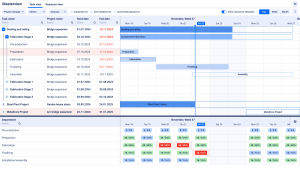
2) Track the “phase time,” not just the total A shop-friendly breakdown is:
engineering/drawings
procurement/material readiness
cutting
forming
fit-up
welding
finishing
assembly
QC/pack
shipping
Once you see where days pile up, improvement gets obvious.
3) Use distributions, not just averages Averages hide ugly reality. Track:
median (typical performance)
80th/90th percentile (what happens in bad weeks) This is what protects your quote promises.
4) Capture delay reasons as a short list Keep it simple: waiting on material, drawing changes, rework, subcontract lead time, capacity overload, customer change request. A few consistent categories beats a messy spreadsheet of 50.
5) Reduce WIP on purpose Most shops try to lower cycle time by starting earlier or starting more. That usually increases WIP and makes everything slower. Instead:
gate release by readiness (material + drawings + approvals)
limit WIP per department
protect the bottleneck with ready work
6) Build a weekly rhythm A 30-45 minute weekly review (plus a quick daily check-in) is enough: