Work-in-Progress (WIP) refers to products or materials that have been started in the production process but are not yet completed.
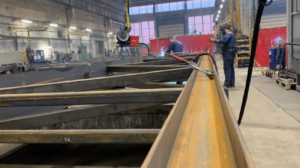
In the context of a steel fabrication shop, WIP might mean beams that have been cut and drilled but not yet welded into frames, or a batch of parts in the welding bay awaiting assembly.
Managing WIP well is crucial for cash flow and scheduling. Too much WIP ties up capital and floor space, while too little may indicate idle capacity.
Keeping WIP levels optimal helps a small shop maintain continuous flow, identify bottlenecks, and measure the true status of projects in production.
Typical pain points when WIP is poorly controlled
Job-stacking and priority fog: operators start whatever material shows up first, so half-finished jobs pile up while high-priority orders wait.
Lost time on change-overs: bouncing between partial batches means extra torch setups, grinder wheel swaps, and fixture resets.
Part hunting and rework: components sit unlabelled, when the job finally comes back around people can’t find the right revision and end up cutting twice.
Hidden cash drains: WIP that sits for days soaks up labor already booked on the job, inflates work-in-process inventory on the balance sheet, and often masks overruns until it’s too late.
WIP tracking software for steel fabrication
Software can hold the same WIP list a whiteboard holds and add what the whiteboard cannot: the value sitting in each status, the stages with no due date, and the ones that have been “nearly finished” for weeks. EZIIL does this with job tracking software that reads phase statuses and the quantities workers report per operation, so work in progress updates as the floor reports instead of on Friday.